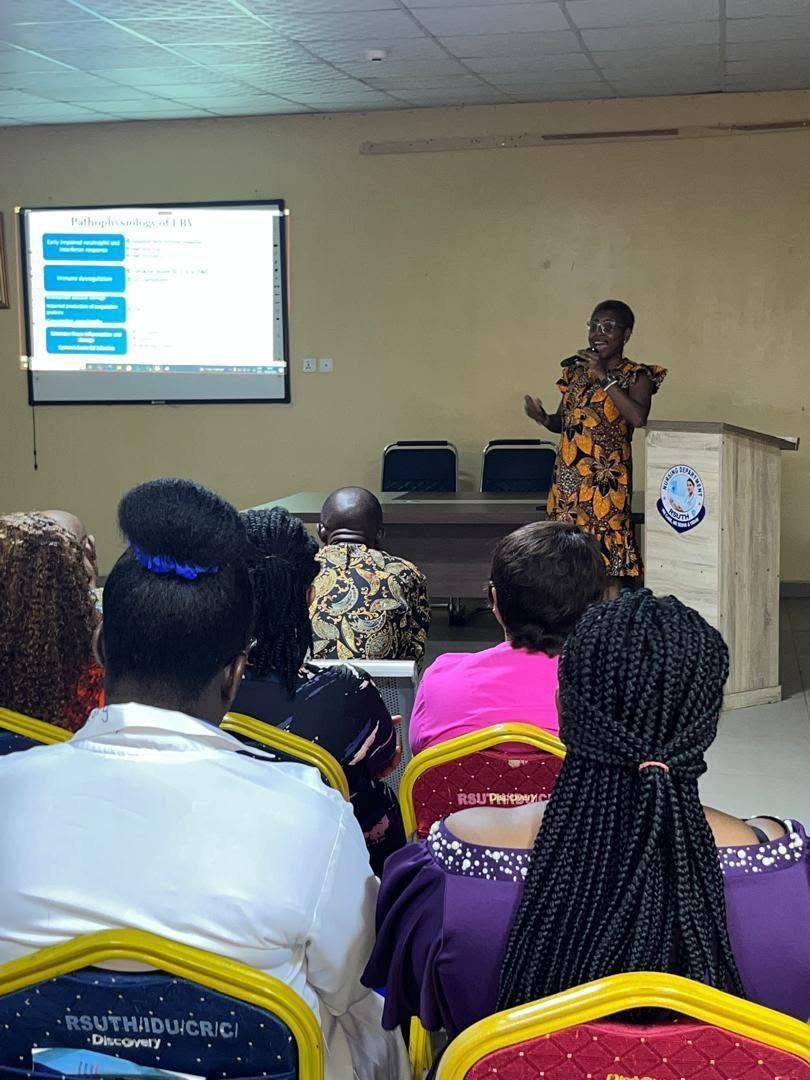
The Rivers State University Teaching Hospital, RSUTH, has reinforced its readiness to detect and contain suspected Ebola virus disease cases following a high-level preparedness session at the hospital’s Infectious Disease Unit, IDU.
The training brought together healthcare professionals, infection prevention and control officers, nurses, medical laboratory scientists, and members of the hospital’s emergency response team. The goal was to tighten protocols and ensure there are no gaps in the hospital’s defense against highly infectious diseases.
Prof. Ibinabo Oboro, Consultant Clinical Microbiologist and Co-Chair/Focal Person of the IPC/AMR Committee at RSUTH, led the session. She stressed that early detection, rapid response, and strict adherence to infection prevention protocols are non-negotiable for protecting both patients and healthcare workers.
Participants reviewed and updated Standard Operating Procedures for screening, isolation, case management, and the safe referral of suspected Ebola cases within the hospital. Prof. Obolo also urged continuous surveillance, rigorous hand hygiene, correct use of Personal Protective Equipment, PPE, and improved environmental sanitation across all departments. “Universal precautions must remain our first line of defense,” she reminded staff, while emphasizing the need for prompt reporting of any suspected infectious disease.
Dr. Ekele Amadi Robert provided technical insight on the features of Ebola virus, clinical management, and warning signs. She confirmed that the Infectious Disease Unit has dedicated isolation facilities and emergency supplies ready for activation. Attention was also drawn to ongoing staff training and simulation drills designed to sharpen emergency response and minimize transmission risk within the facility.
The IPC Committee reaffirmed its commitment to strengthening infection prevention systems through continuous education, teamwork, and collaboration with the Rivers State Ministry of Health and other public health agencies. The committee further called for heightened public awareness and community sensitization on Ebola prevention: avoid contact with infected persons or bodily fluids, maintain proper hygiene, and seek immediate medical attention for symptoms such as fever, vomiting, and unexplained bleeding.
The preparedness exercise underscores RSUTH’s commitment to safeguarding public health and improving emergency response to disease outbreaks. Through its Institute of Infectious Disease Research and Development and robust IPC programs, the hospital continues to build capacity to manage highly infectious threats.
RSUTHMEDIA